
Why Rat Proofing Matters as Much as Rat Removal
Rat Proofing & Pest Control at a Northamptonshire Church
When people discover rats inside a building, the immediate focus is often on removing the rodents themselves. However, in many cases, the long-term solution is not just about trapping or treatment. It is about understanding how the rats are getting inside in the first place.
At iX5 Pest Control, we were recently contacted regarding rat activity at a church in Northamptonshire. Rats had begun accessing the vestry area of the building, where food supplies intended for charitable and community support were being stored.
The concern was not simply the presence of rats themselves, but the potential contamination risks associated with rodents accessing areas used for food storage within an occupied community building.
Rather than simply placing bait down and treating the visible activity, the priority was to investigate how the rats were entering the property and identify the underlying cause of the problem.
Investigating the Source of the Rat Activity
Initial signs of activity had been noticed within the vestry itself. However, as is often the case with rodent infestations, the location where rats are seen is not always the location where they are entering.
A full survey of the surrounding areas and adjoining sections of the building was carried out to trace the rats’ movement routes through the property.
During the inspection, it became clear that the rats were gaining access through the church boiler room.
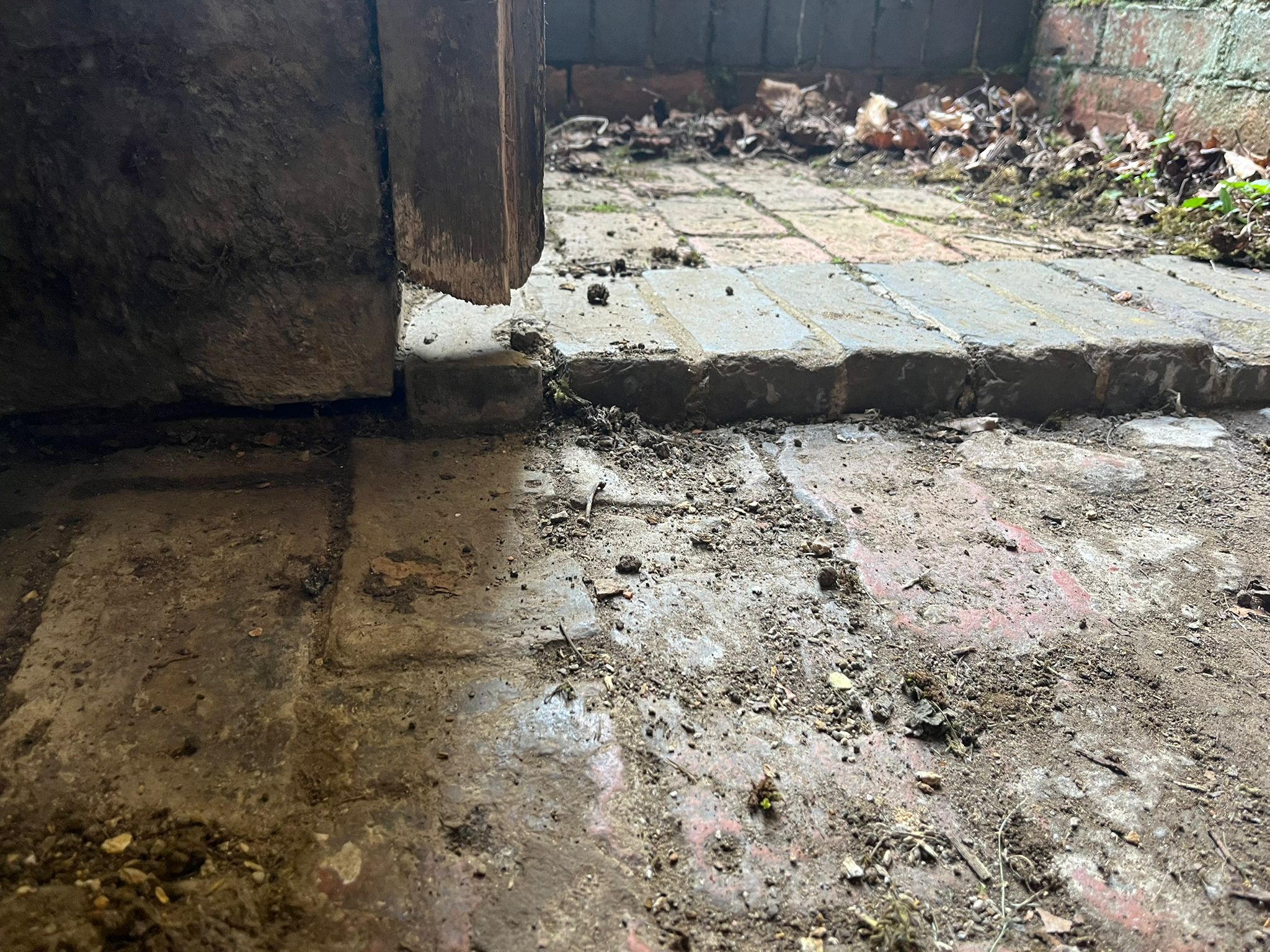
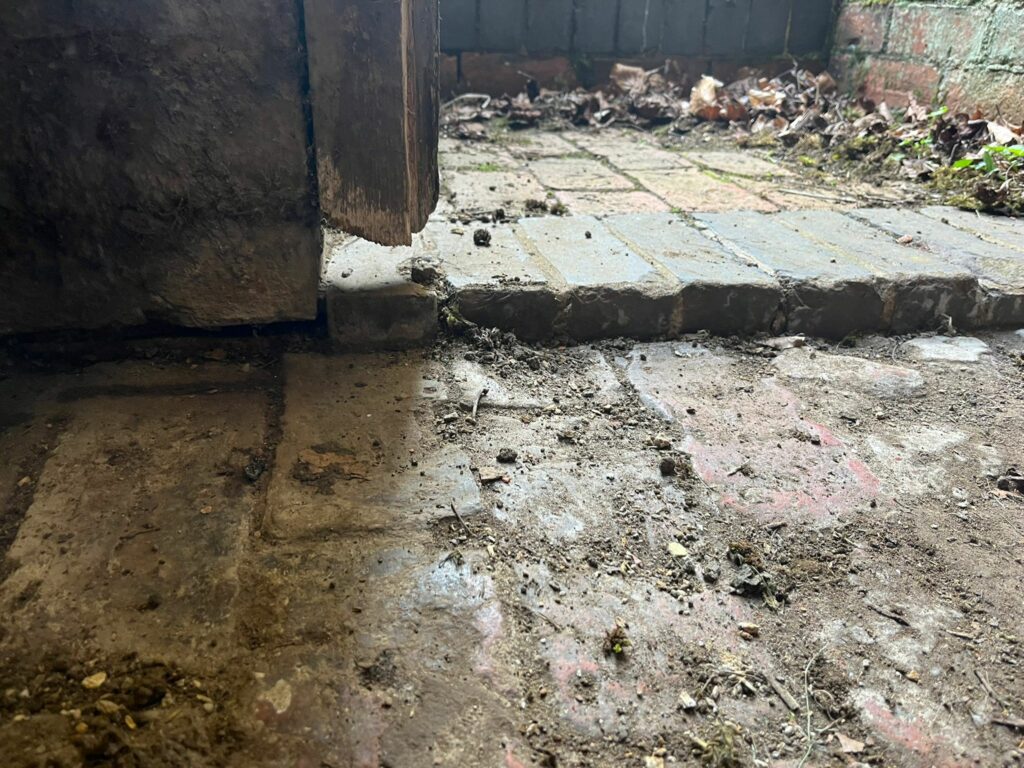
The lower section of the timber door frame and surrounding base area had deteriorated and begun rotting away over time, creating a gap which the rats had exploited. Rather than creating an entirely new entry route, the rodents had simply enlarged and utilised an existing structural weakness within the building.
Rats often exploit existing weaknesses within buildings rather than creating completely new access routes from scratch. Even relatively minor structural deterioration can eventually become a significant access point if left unresolved.
Once inside the boiler room, the rats were then able to move through adjoining structural voids and internal access routes into the vestry area where food was being stored.
This type of hidden movement route is extremely common in older and more complex buildings. Rats are highly capable climbers and navigators, often travelling through voids, service areas, pipe routes and concealed spaces without immediately being noticed.
Particular attention was given to protecting areas associated with food storage and reducing the risk of further contamination.
At iX5 Pest Control, we always aim to identify the underlying cause of a pest issue rather than simply treating the visible symptoms. In many cases, recurring infestations continue because the original access route or environmental condition has never properly been addressed. You can read more about our approach to identifying the root cause of pest problems.
What Causes Rats to Enter Buildings?
Rats are constantly searching for environments that provide:
- Shelter
- Warmth
- Food sources
- Protection from predators
- Hidden movement routes
- Safe nesting opportunities
Older buildings can unintentionally provide all of these conditions, particularly where ageing materials, damaged timber or small structural defects create hidden entry opportunities.
Boiler rooms, service areas and storage spaces are particularly attractive because they are often warm, sheltered and subject to less regular disturbance.
In many cases, rats are not creating entirely new access routes. Instead, they are exploiting weaknesses that already exist within the structure of the building.
Why Older Buildings Are Particularly Vulnerable to Rats
Churches and older properties can naturally become more vulnerable to rodent activity over time due to the way buildings age and settle.
Situations like this are common in older and historic buildings where ageing materials create hidden vulnerabilities over time.
Small gaps, deteriorating timber, damaged vents, worn masonry and ageing service areas can all create opportunities for rats to gain access.
Boiler rooms in particular can become attractive to rodents because they often provide:
- Warmth
- Shelter
- Reduced human disturbance
- Hidden movement routes
- Access to adjoining internal spaces
In this case, the damaged timber and deteriorated base area around the boiler room doorway had created the perfect access point.
Importantly, rats do not need large openings to gain entry. Even relatively small weaknesses within a structure can quickly become enlarged through repeated gnawing and use.
The Rat Proofing Repairs
Once the access point had been identified, the next stage was to carry out proofing work to physically prevent the rats from re-entering the building.
The damaged lower section of the timber door frame and surrounding affected area was carefully cut away and removed.
A replacement timber section was then installed and reinforced using heavy-duty rodent-proof mesh to prevent future gnawing access through the repaired area.
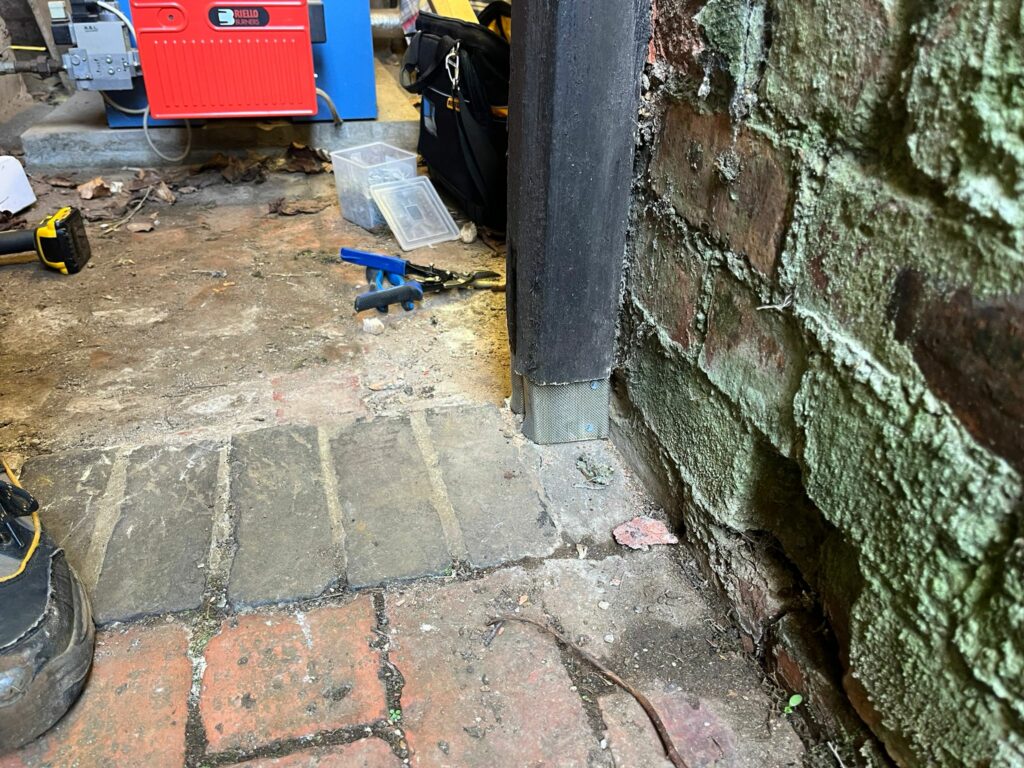
This type of repair is important because simply replacing damaged timber alone often does not solve the long-term problem. Rats are persistent and can quickly re-exploit weak materials if suitable proofing measures are not incorporated into the repair itself.
The objective was not just to patch the visible damage, but to remove the rats’ established access route entirely.
The work was carried out carefully to minimise disruption to the building and its day-to-day use.
Why Rat Proofing Matters as Much as Rat Removal
One of the biggest misconceptions surrounding rodent control is that removing the rats automatically solves the problem.
In reality, if rodents can still physically access the building, new rats will often continue to enter and the infestation cycle can quickly begin again.
This is why proofing work is often just as important as the trapping or treatment process itself.
In many situations, successful long-term rodent control requires:
- Identifying how rodents are entering
- Eliminating structural access points
- Preventing future re-entry
- Monitoring ongoing activity
- Reducing harbourage opportunities around the property
Without proofing measures, treatment alone can become a short-term solution to a long-term structural issue.
Follow-Up Control Measures
Once the structural proofing repairs had been completed, follow-up trapping and monitoring work was carried out both internally and externally around the property to deal with any remaining rat activity.
With the main access route removed, the effectiveness of the control measures improved significantly.
Follow-up monitoring showed that activity reduced significantly once the access route had been removed.
The combination of proofing and follow-up control work helped protect the vestry area and reduce the risk of ongoing rodent access to the building.
Common Signs of Rat Access Around Buildings
Many rodent infestations begin with small structural defects that gradually worsen over time.
Some common warning signs can include:
- Gnawed timber or door frames
- Scratching sounds in walls or service areas
- Droppings near boiler rooms or storage spaces
- Grease marks around access routes
- Gaps beneath doors
- Damaged vents or air bricks
- Repeated sightings near the same part of a building
Early investigation is often critical, as small access points can eventually lead to much larger infestations if left unresolved.
Frequently Asked Questions About Rat Proofing
Most frequent questions and answers
Can rats chew through wood?
Yes. Rats are capable of gnawing through weakened timber, particularly where wood has already deteriorated through age, moisture or rot.
Can rats get through small gaps?
Yes. Rats can squeeze through surprisingly small openings and may enlarge existing weaknesses within buildings over time.
What is rodent proof mesh?
Rodent proof mesh is a reinforced protective material used to cover or strengthen vulnerable areas of a building to help prevent rodents from gnawing or gaining access.
Why do rats enter boiler rooms?
Boiler rooms often provide warmth, shelter and reduced disturbance, making them attractive environments for rodents seeking nesting and movement routes.
Will rats come back if entry points are not sealed?
In many cases, yes. If access points remain available, new rats may continue to enter the property even after treatment or trapping work has been carried out.
Professional Rat Proofing & Pest Control in Northamptonshire
Every building presents different challenges when it comes to rodent control. Older properties, churches and community buildings often require a more investigative approach to identify hidden access points and long-term vulnerabilities.
Alongside investigative surveys and proofing work, we also provide professional rat control services for domestic, commercial and community buildings across Northamptonshire and surrounding areas.
At iX5 Pest Control, we provide:
- Rat control and monitoring
- Rodent proofing solutions
- Building surveys and inspections
- Access point identification
- Preventative pest control advice
- Pest control support for commercial, domestic and community properties
If you are experiencing recurring rat activity within a property, identifying how rodents are entering is often just as important as removing the rodents themselves.