


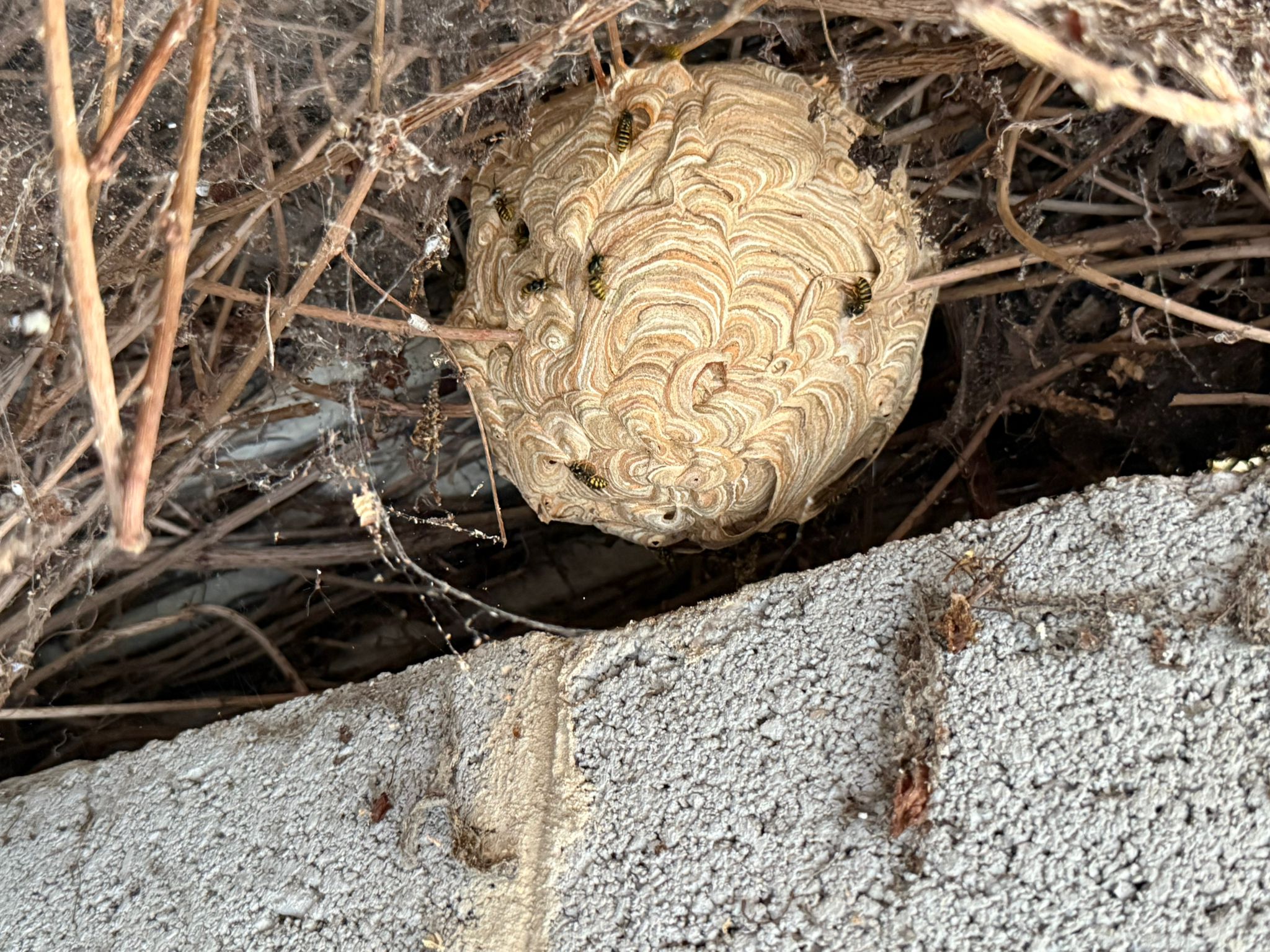
Early Signs of a Wasp Nest Before It Becomes a Problem
If you are noticing increased wasp activity around your home or business, you may be wondering whether a wasp nest is developing nearby.
Most people do not notice a wasp nest when it first starts.
By the time wasps are appearing regularly around rooflines, loft spaces, gardens or outdoor seating areas, the nest itself may already contain a substantial number of worker wasps and continue growing rapidly through the warmer months.
Spotting the early signs of a wasp nest can help prevent a smaller seasonal issue from becoming a larger safety concern later in the summer.
At iX5 Pest Control, we are often contacted once wasp activity has become difficult to ignore. However, many nests show warning signs much earlier if you know what to look for.
Throughout Northamptonshire, Milton Keynes, Rugby and surrounding areas, iX5 Pest Control regularly deals with wasp nests in loft spaces, roof voids, wall cavities, garages and commercial buildings during the warmer months.
What Are the Early Signs of a Wasp Nest?
Early signs of a wasp nest often include:
- Repeated wasp activity around one location
- Wasps entering roof gaps, vents or soffits
- Visible flight paths to and from the same access point
- Buzzing sounds in lofts, ceilings or walls
- Wasps appearing indoors regularly
- Increasing activity levels over time
While seeing the occasional wasp outdoors during summer is completely normal, concentrated and predictable activity around a property can indicate that a nest is developing nearby.
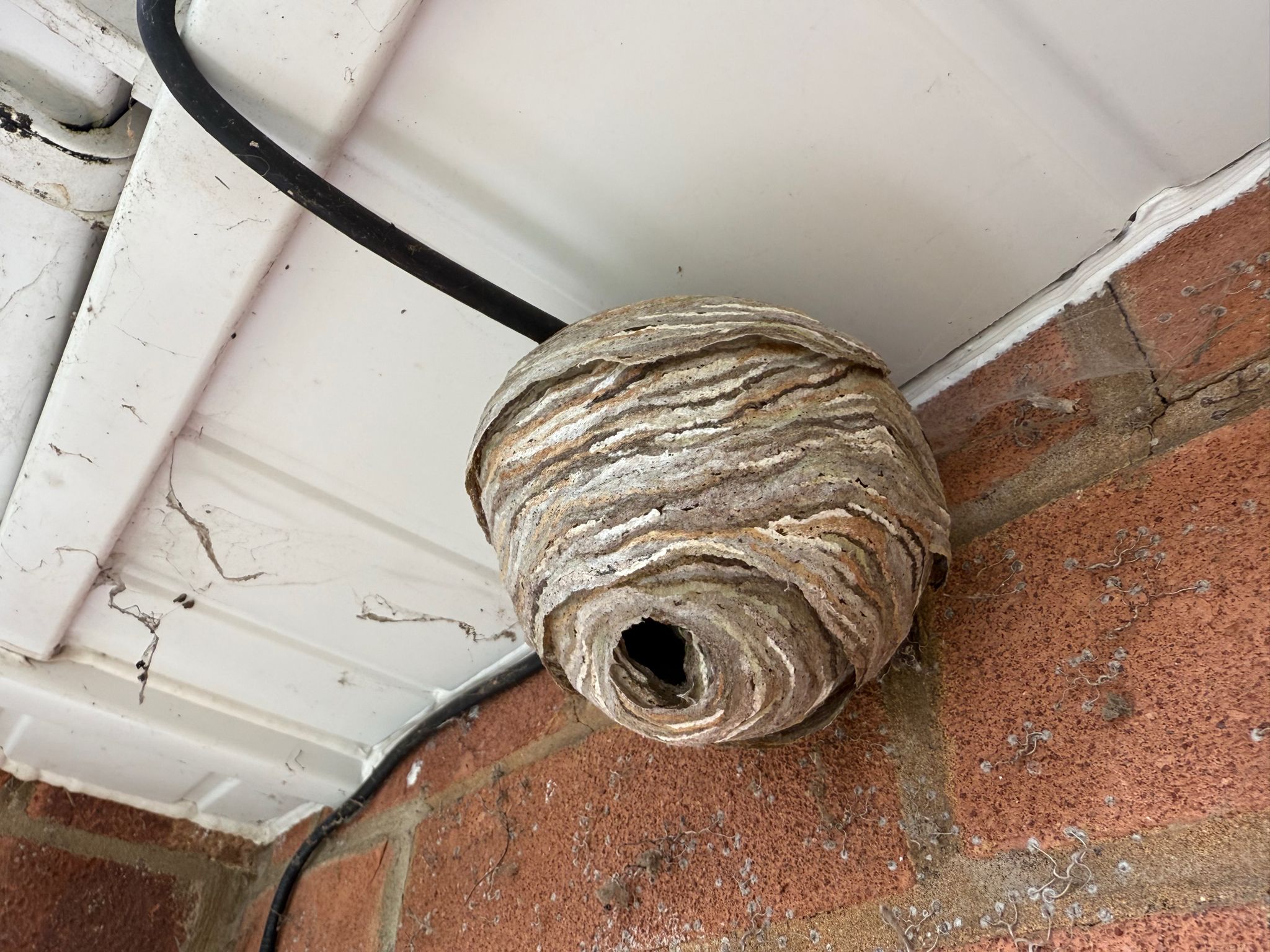
Why Early Detection Matters
A wasp nest starts small.
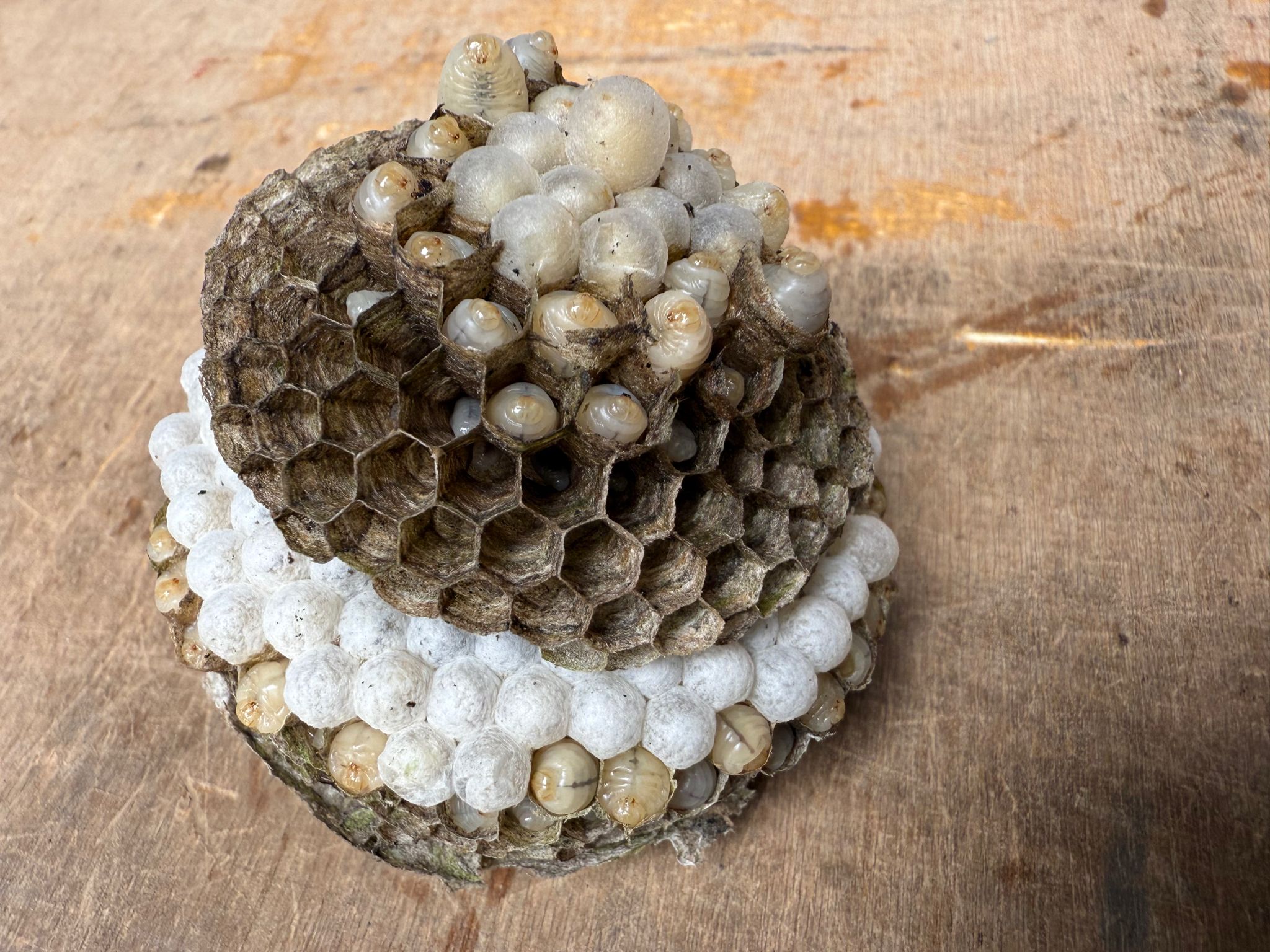
In spring, a queen wasp emerges from hibernation and begins building a new nest alone. Early nests may only contain a handful of wasps and can remain unnoticed for several weeks.
As temperatures increase and worker wasps emerge, the colony expands quickly. By late summer, large nests can contain thousands of wasps.
The earlier nesting activity is identified:
- The easier the nest is usually to treat
- The lower the risk of defensive wasp behaviour
- The fewer wasps will already be present
- The easier it is to minimise disruption around homes or businesses
Many nests are only discovered once activity becomes more severe. In reality, most colonies gradually become more noticeable over time.
What Time of Year Do Wasps Start Nesting?
Queen wasps typically emerge during spring, usually between April and May depending on weather conditions.
At this stage, the queen creates a small starter nest and raises the first generation of worker wasps alone.
Once workers emerge, nest development accelerates throughout June, July and August as the colony expands.
Late summer is often when:
- Wasp numbers increase significantly
- Activity around food waste and outdoor bins becomes more noticeable
- Nests reach their largest size
- Wasps become more defensive around nesting areas
Wasp nests are never reused the following year. However, properties with sheltered roof spaces, loft voids or protected access points may attract new nests in similar locations in future seasons.
Not Every Wasp Sighting Means You Have a Nest
Seeing the occasional wasp in a garden or outdoor area during warmer weather does not necessarily indicate a nesting problem nearby.
Wasps naturally forage for food during summer and are commonly seen around flowers, bushes, bins and outdoor eating areas.
Concern usually develops when activity becomes:
- Concentrated around one area
- Consistent throughout the day
- More noticeable week by week
- Focused around rooflines, vents or structural gaps
In many cases, a professional inspection can quickly determine whether active nesting is actually present.
How Do You Know if You Have a Wasp Nest?
One of the clearest indicators of a developing nest is repeated movement to and from the same location.
Unlike isolated wasps passing through a garden, nesting activity becomes more structured and predictable over time.
You may notice:
- Wasps repeatedly entering the same small gap
- Activity around soffits, fascia boards or air vents
- Wasps disappearing beneath roof tiles or cladding
- Consistent movement near sheds, garages or decking
- Increased activity during warmer afternoons
Nest entrances are often surprisingly small and may initially go unnoticed.
In many cases, homeowners first identify a problem simply because they keep seeing wasps returning to the same area of the property.
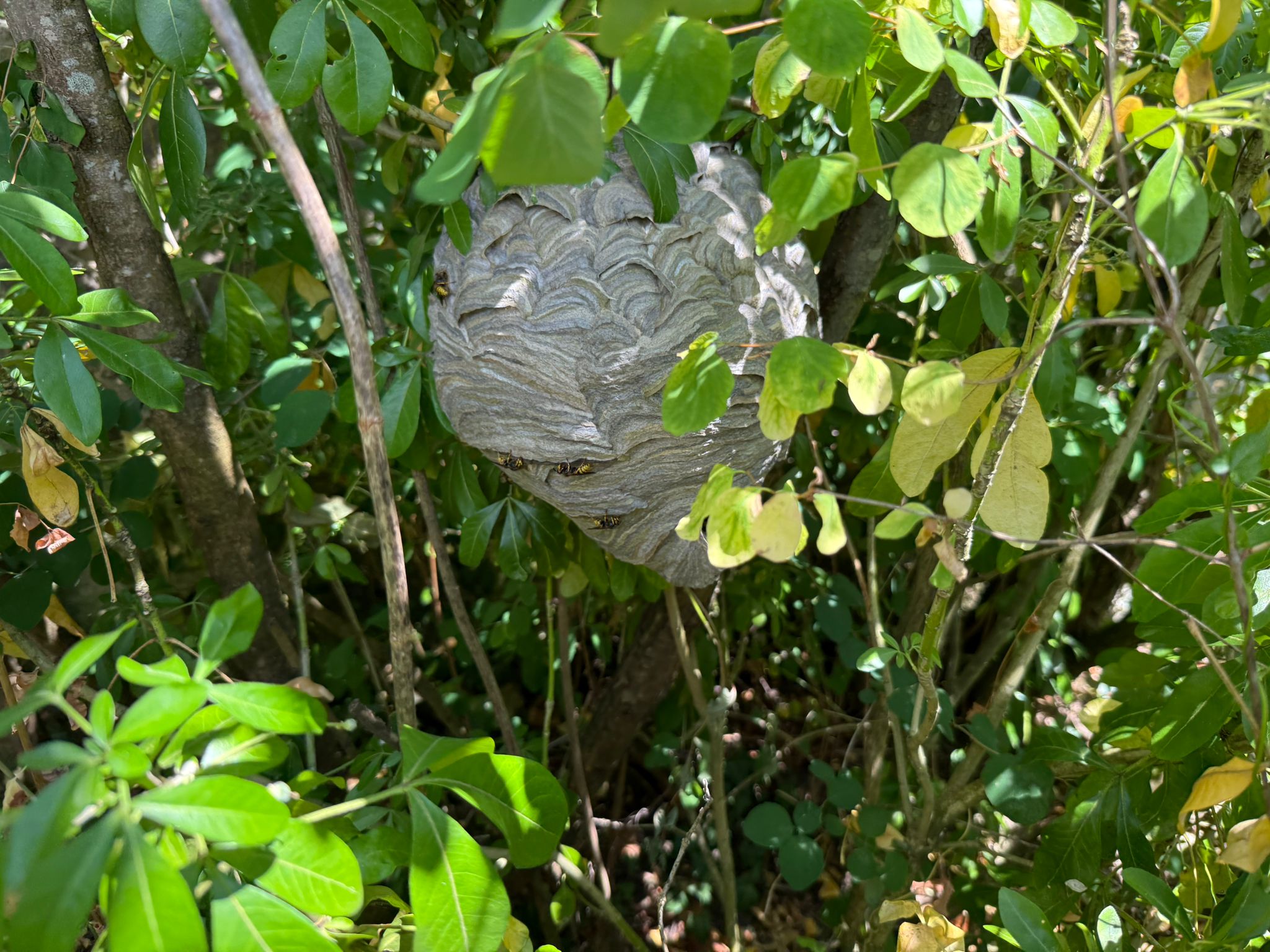
A Constant Flight Path
As a colony becomes more established, worker wasps begin following regular routes between the nest and nearby food sources.
This often creates a visible flight path where wasps repeatedly travel in straight, purposeful lines to one location.
You may observe:
- Wasps entering and exiting every few seconds
- Consistent movement throughout the day
- Activity increasing during warmer weather
- More concentrated movement week by week
This behaviour is very different from isolated wasps randomly moving around a garden or outdoor space.
Buzzing Sounds in Walls or Ceilings
Some wasp nests develop in concealed areas such as:
- Loft spaces
- Cavity walls
- Ceiling voids
- Extensions
- Flat roofs
When this happens, people sometimes hear a faint but persistent humming or buzzing sound, particularly during quiet periods or warmer afternoons.
This is often mistaken for electrical humming, plumbing noise or general building movement.
In warmer weather, concealed nesting activity may become more noticeable as worker numbers increase.
Additional signs can include:
- Wasps appearing indoors on upper floors
- Activity around ceiling light fittings or vents
- Small staining marks on ceilings (do not poke brown stains on ceilings!)
- Dead wasps collecting near loft hatches or windows
Hidden nests can remain undetected for long periods before activity becomes obvious externally.
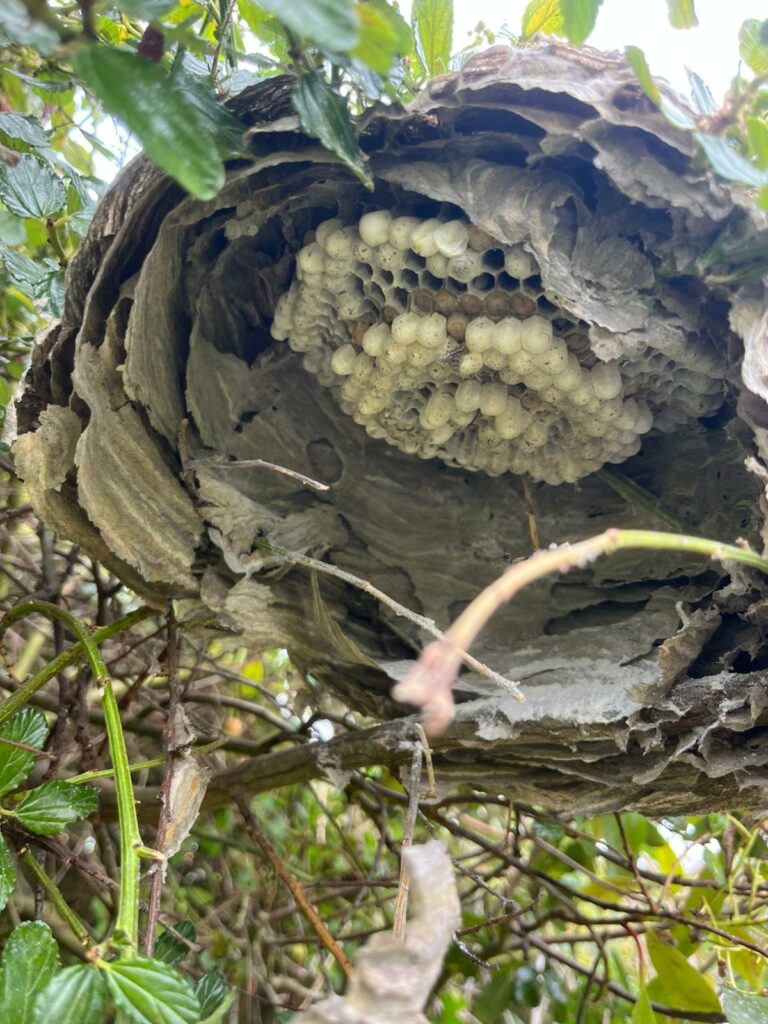
Small Starter Nests in Sheltered Areas
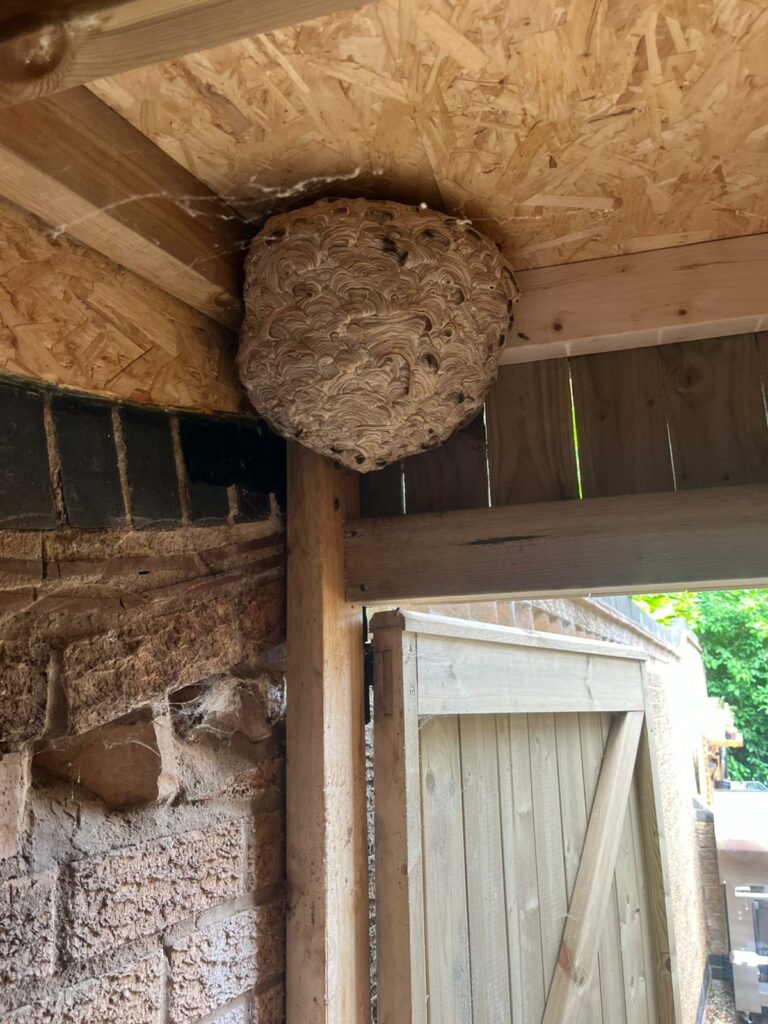
During spring and early summer, starter nests may occasionally be visible before the colony expands further.
These small papery nests are commonly found:
- In sheds and garages
- Behind fascia boards
- Under decking
- Inside roof voids
- Within garden structures
- In sheltered storage areas
Early nests are usually grey in colour with a paper-like appearance created from chewed wood fibres mixed with saliva.
Some starter nests may initially be no larger than a golf ball, but activity can increase rapidly once worker wasps emerge.
Wasps Inside the Property
Repeated wasp sightings indoors can sometimes indicate concealed nesting activity within the property structure.
This may happen when:
- A nest develops in the loft and wasps find their way through downlighters or other gaps
- Wasps build a nest in air vents or air bricks
While a single wasp indoors is not usually a concern, repeated sightings near upper floors, loft hatches or windows may suggest a nearby nest.
In some cases, people notice:
- Multiple wasps gathering around windows
- Increased activity during warm afternoons
- Wasps collecting around light sources
- Dead wasps frequently indoors
These signs are more common during peak nesting months.
Where Do Wasps Usually Build Nests?
Wasps are attracted to sheltered spaces that provide warmth and protection.
At iX5 Pest Control, we commonly find nests in:
- Loft spaces
- Roof eaves and soffits
- Wall cavities
- Garages and sheds
- Air vents
- Under decking
- Commercial roof voids
- Outdoor seating areas
- Cladding gaps
- Storage containers
- Ceiling voids
Some nests remain hidden until activity levels increase significantly, while others become visible much earlier in the season.
Signs a Wasp Nest May Be Developing Quickly
As colonies grow, activity levels often become more noticeable.
Signs that a nest may be developing rapidly include:
- Increasing numbers of wasps around one location
- Continuous movement in and out of an access point
- Activity around food waste or outdoor bins
- Wasps reacting defensively near entrances
- Increased activity around pathways, seating areas or doors
Late summer colonies are often larger and more active than early-season nests.
The longer a nest remains untreated, the more disruptive the activity can become around the property.
Wasp Nests Around Commercial Properties
Wasp nesting activity is not limited to residential homes.
At iX5 Pest Control, we regularly deal with nests affecting:
- Warehouses
- Schools
- Restaurants and pubs
- Retail units
- Hospitality venues
- Industrial estates
- Loading bays
- Bin storage areas
- Outdoor customer seating spaces
Commercial environments can become particularly vulnerable during summer due to food waste, sheltered structures and high levels of foot traffic.
For businesses, nesting activity can create:
- Health and safety concerns
- Risks to customers and staff
- Disruption to outdoor areas
- Operational inconvenience
- Negative customer experiences
While most wasp stings are painful rather than serious, they can present increased risks for individuals with allergies or sensitivities.
How to Reduce the Risk of Wasp Nesting
While it is not always possible to prevent wasps entirely, some practical steps may help reduce the likelihood of nesting activity.
These include:
- Inspecting lofts and sheds during spring
- Repairing damaged soffits or vents
- Sealing unnecessary external gaps where practical
- Keeping outdoor bin areas clean
- Monitoring garden buildings during warmer months
- Removing food waste promptly from external areas
Early monitoring can often help identify activity before nests become larger and more difficult to manage.
Why You Should Avoid DIY Wasp Nest Removal
Many people attempt to spray visible activity or block nest entrances themselves.
Unfortunately, this often makes the situation worse.
Blocking an active entrance may force wasps to search for alternative routes into and out of the property, while disturbing a nest can increase defensive behaviour.
Professional treatment helps ensure:
- The nest location is properly identified
- Appropriate treatment is used
- Risks to occupants and neighbouring properties are reduced
- Concealed activity is not overlooked
When Should You Call Pest Control for Wasps?
It is usually best to seek professional advice if you notice:
- Repeated wasp activity around one location
- Wasps entering roof spaces or wall gaps
- Buzzing sounds within walls or ceilings
- A visible nest structure
- Increasing activity levels around the property
- Wasps regularly appearing indoors
Early intervention can often help prevent:
- Larger colony development
- Increased defensive behaviour later in the season
- Internal property disruption
- Greater risks around customers, children or pets
Professional assessment can also help determine whether the activity relates to nesting or simply normal seasonal wasp behaviour.
Frequently Asked Questions About Wasp Nests
Most frequent questions and answers
What are the first signs of a wasp nest?
Early signs often include repeated wasp movement to one area, wasps entering roof gaps or vents, light buzzing or humming sounds in walls or ceilings and increasing activity levels over time.
How quickly can a wasp nest grow?
A small starter nest in spring can develop into a large active colony by late summer once worker wasps emerge and expand the nest.
Can wasps damage property?
Wasps do not usually cause structural damage in the same way as rodents or timber pests. However, nesting activity can create disruption and safety concerns around properties and commercial premises. Wasp activity can also damage plasterboard where a nest is located on this.
Can a wasp nest survive winter?
Worker wasps and nests die off as weather gets colder in the autumn. Only newly fertilised queens hibernate and survive winter before creating new nests the following year.
Will wasps return to the same nest every year?
No. Wasp nests are always abandoned at the end of the season and are never reused. However, new queens may return to similar sheltered areas around the property in future years to build a new nest.
Are wasps more active in hot weather?
Yes. Warmer temperatures generally increase wasp activity, particularly during afternoons when workers are actively foraging.
Is it dangerous to block a wasp nest entrance?
Yes. Blocking an active entrance can force wasps to search for alternative escape routes, potentially driving activity into other parts of the property.
Do I need pest control for a small wasp nest?
Even small nests can expand rapidly during warmer months. Professional assessment can help determine the safest course of action before activity increases further.
Professional Wasp Nest Removal Across Northamptonshire, Milton Keynes & Surrounding Areas
iX5 Pest Control provides professional wasp nest removal services for residential and commercial properties across:
- Northampton
- Milton Keynes
- Daventry
- Rugby
- Market Harborough
- Towcester
- Brackley
- Wellingborough
- Kettering
- Corby
- Olney
- and all surrounding areas
Our BPCA registered technicians safely assess nesting activity, identify access points and provide professional treatment for both visible and concealed wasp nests.
We regularly support:
- Homeowners
- Landlords
- Schools
- Hospitality venues
- Offices
- Warehouses
- Facilities management companies
- Commercial premises
Whether the nest is located in a loft space, wall cavity, roofline, garden structure or commercial building, our team can provide practical advice and professional support to help resolve the problem safely.
If you are concerned about increasing wasp activity around your property, contact iX5 Pest Control for professional advice and wasp nest removal support.
Concerned About Wasp Activity?
A wasp nest will not suddenly appear overnight.
There are early warning signs long before activity becomes severe. Identifying those signs early can help reduce safety risks, minimise disruption and prevent a smaller nest from developing into a much larger problem later in the season.
If you have noticed increasing wasp activity around your property, iX5 Pest Control can assess the situation and provide practical advice on the safest next steps.