

Bee Removal & Chimney Clearance Case Study
iX5 Pest Control was contacted by a homeowner in Sibbertoft, Northamptonshire after ongoing concerns about a long-established bee colony within a chimney flue.
The customer had purchased the property approximately 8 months earlier and had already been made aware that significant roofing and chimney repairs would eventually be required.
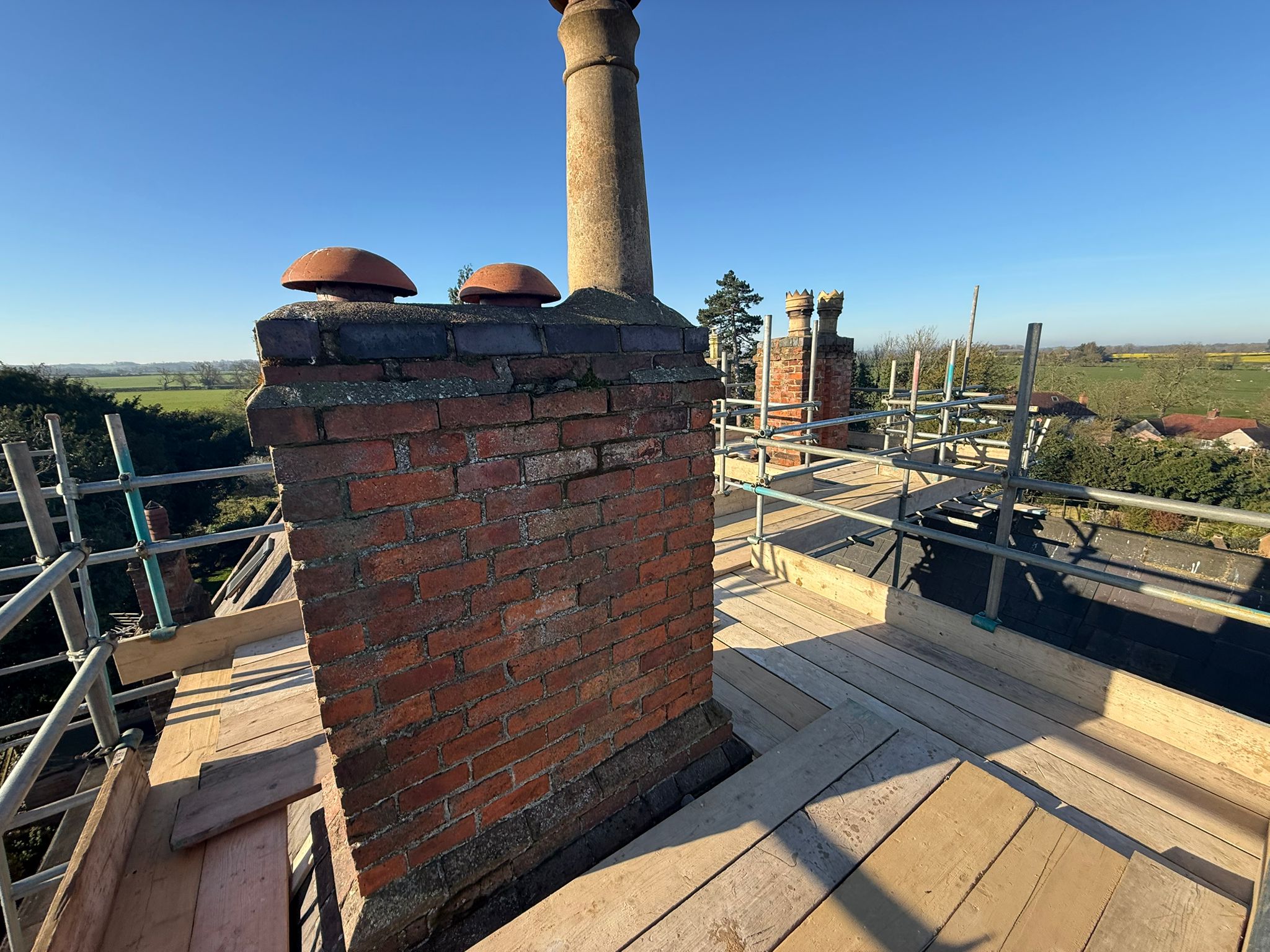
Alongside wider roof restoration work involving scaffolding and repairs to soffits and chimney areas, the homeowner wanted to investigate safely removing the bee colony that had been occupying one of the chimney flues for several years.
The project required careful planning due to:
- The age and condition of the chimney
- The height and access requirements
- The unknown extent of comb within the flue system
- Concerns around whether the colony extended below roof level
- The need to coordinate works alongside building contractors
Initial Survey & Assessment
Following the initial enquiry, iX5 Pest Control carried out a full honeybee site survey to assess the condition of the chimney and determine the likely extent of activity within the flues.
During the assessment, it became apparent that:
- The colony had likely been present for at least six years
- Significant comb build-up was likely within the flue
- The internal chimney breast remained in excellent decorative condition
- Access limitations could restrict how much material could safely be removed
One of the major considerations during the survey was the possibility that comb could extend below roof level into areas that would not be safely accessible without significant internal disruption.
iX5 Pest Control made these risks clear to the customer during the proposal stage.
The homeowner was advised that while the team would remove all safely accessible comb from above, there was a possibility that some material deeper within the chimney structure may not be reachable if it extended too far below the accessible flue area.
Coordinating With Roofing Contractors & Scaffold Access
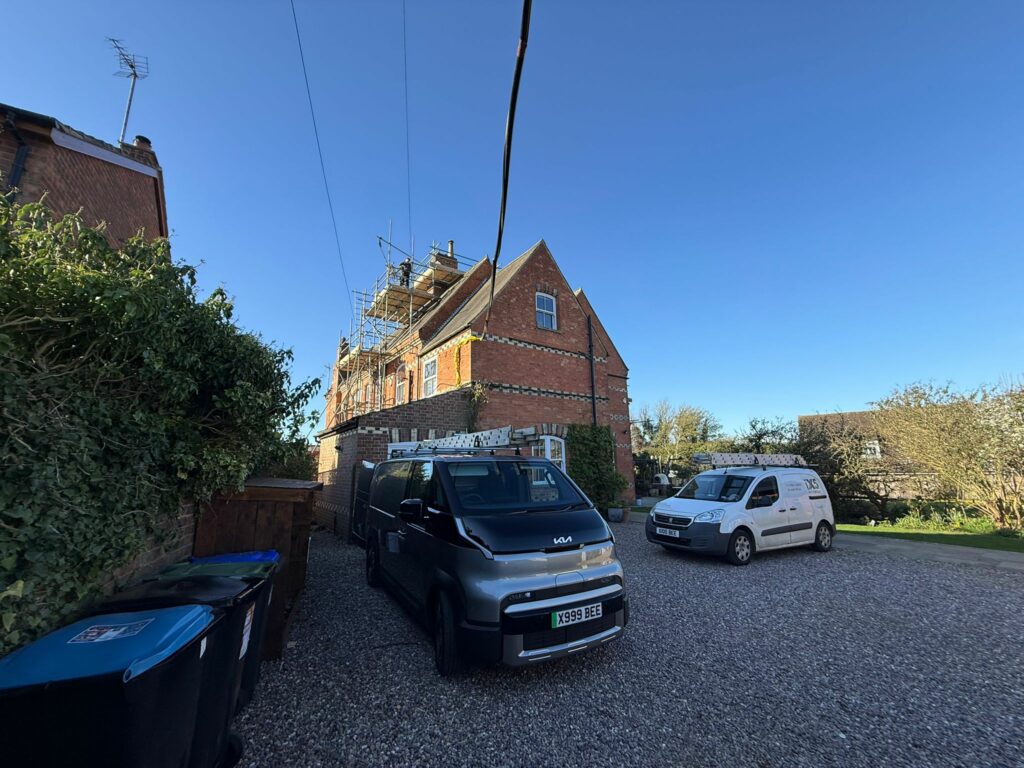
Because the property already required roofing works, iX5 Pest Control worked directly alongside the builder and scaffold contractors to coordinate access safely and efficiently.
Scaffolding was integrated into the planned roofing schedule, allowing the chimney stack to be accessed safely without requiring separate access arrangements later.
This collaborative approach helped:
- Reduce disruption for the homeowner
- Improve safe access to the chimney stack
- Allow multiple property issues to be resolved together
- Prevent delays between contractors
The local builder working on the property was already familiar with the house and confirmed that the bee activity had likely been ongoing for many years.
Seasonal Timing & Bee Activity
The original survey was carried out at the end of the winter when there was little visible bee activity around the chimney.
However, when scaffold access was in place and works began onsite, the remaining colony had died out.
During the removal process, the team discovered that large amounts of moisture had entered the chimney through damaged flaunching and cracks around the chimney top.
This had allowed rainwater to penetrate the flue and soak much of the comb.
It is believed that a combination of:
- Water ingress
- Cold winter conditions
- Long-term exposure within the damaged chimney
ultimately caused the colony to fail.
Opening the Flues & Removing the Comb
Once safe scaffold access was in place, the team opened the affected flues and began carefully investigating the chimney structure.
The first flue contained approximately four feet of comb.
While carrying out further inspections, the team also discovered a second flue within the same chimney stack containing a significantly larger volume of comb estimated at approximately nine feet deep.
In total, two of the three flues within the chimney stack required clearance.
The extent of the comb confirmed that the colony had been established for a considerable period of time.
Because the bees were no longer active, the project focused on:
- Removing the remaining comb safely
- Clearing contaminated material
- Preventing future issues within the chimney structure
- Allowing roofing repairs to proceed safely
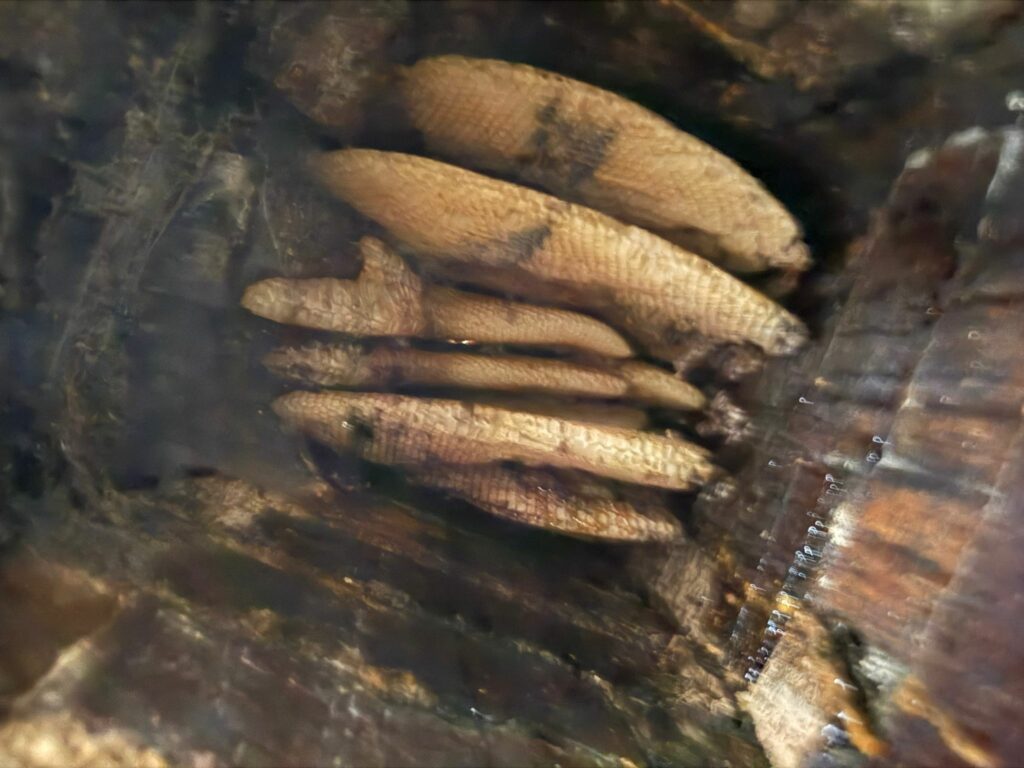
Honey & Comb Condition
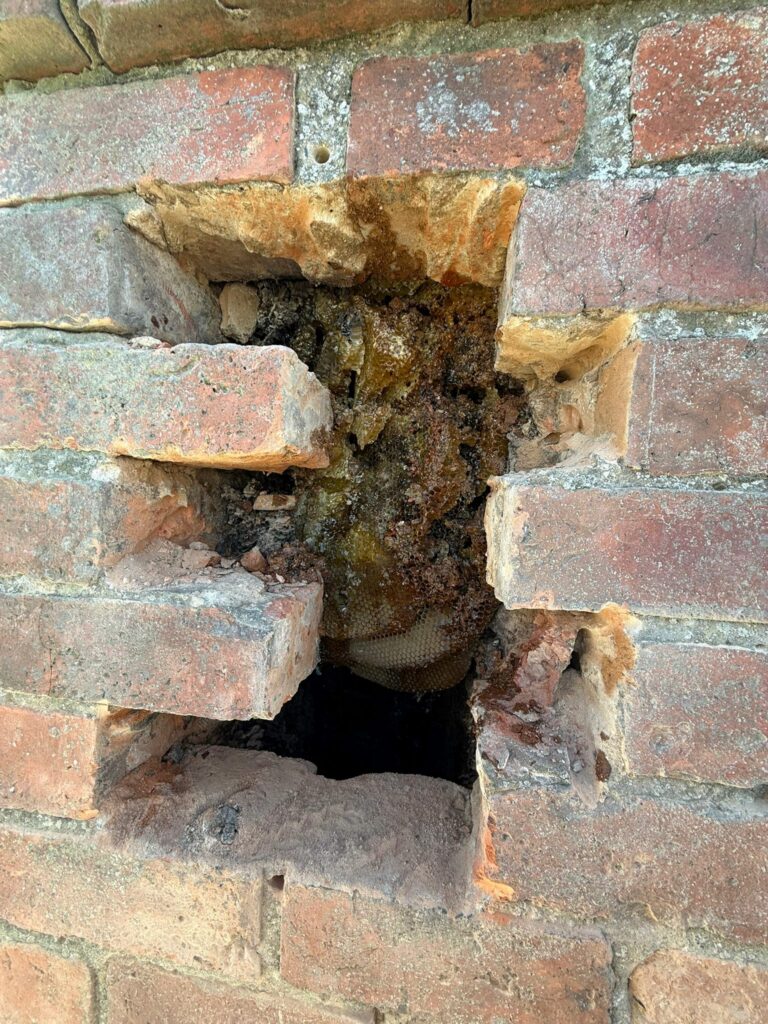
During the removal process, the team discovered that much of the remaining honey and comb had become heavily water damaged.
Under normal circumstances, sections of comb may sometimes be recoverable or recyclable depending on condition.
However, due to prolonged water ingress through the damaged chimney structure, the material had become heavily saturated and deteriorated.
Once honeycomb becomes waterlogged, it begins to break down rapidly and is only fit for disposal.
The Outcome
The chimney flues were successfully opened, cleared and made ready for the wider roofing and chimney restoration works to continue.
By coordinating the bee / comb removal work alongside scaffold access and building repairs, the customer was able to resolve a long-standing issue safely and efficiently within the same project schedule.
The case also highlighted the importance of:
- Early investigation of bee activity in or around chimneys
- Proper structural assessment before removal works begin
- Coordinated contractor access planning
- Addressing water ingress and chimney defects alongside pest issues
- Maintaining chimneys in sound condition
Professional Bee & Chimney Pest Investigations Across Northamptonshire & Surrounding Areas
iX5 Pest Control carries out professional bee investigations, chimney surveys and pest-related access works across:
- Northampton
- Market Harborough
- Rugby
- Daventry
- Milton Keynes
- Kettering
- Corby
- Wellingborough
- Towcester
- Brackley
- Olney
- and surrounding areas
Our team regularly works alongside:
- Roofing contractors
- Builders
- Facilities teams
- Landlords
- Homeowners
- Commercial property managers
Where pest activity intersects with structural access, chimney works or building repairs.
If you are concerned about bee activity within a chimney, roof void or inaccessible area of a property, iX5 Pest Control can provide professional assessment and practical advice on the safest next steps.