


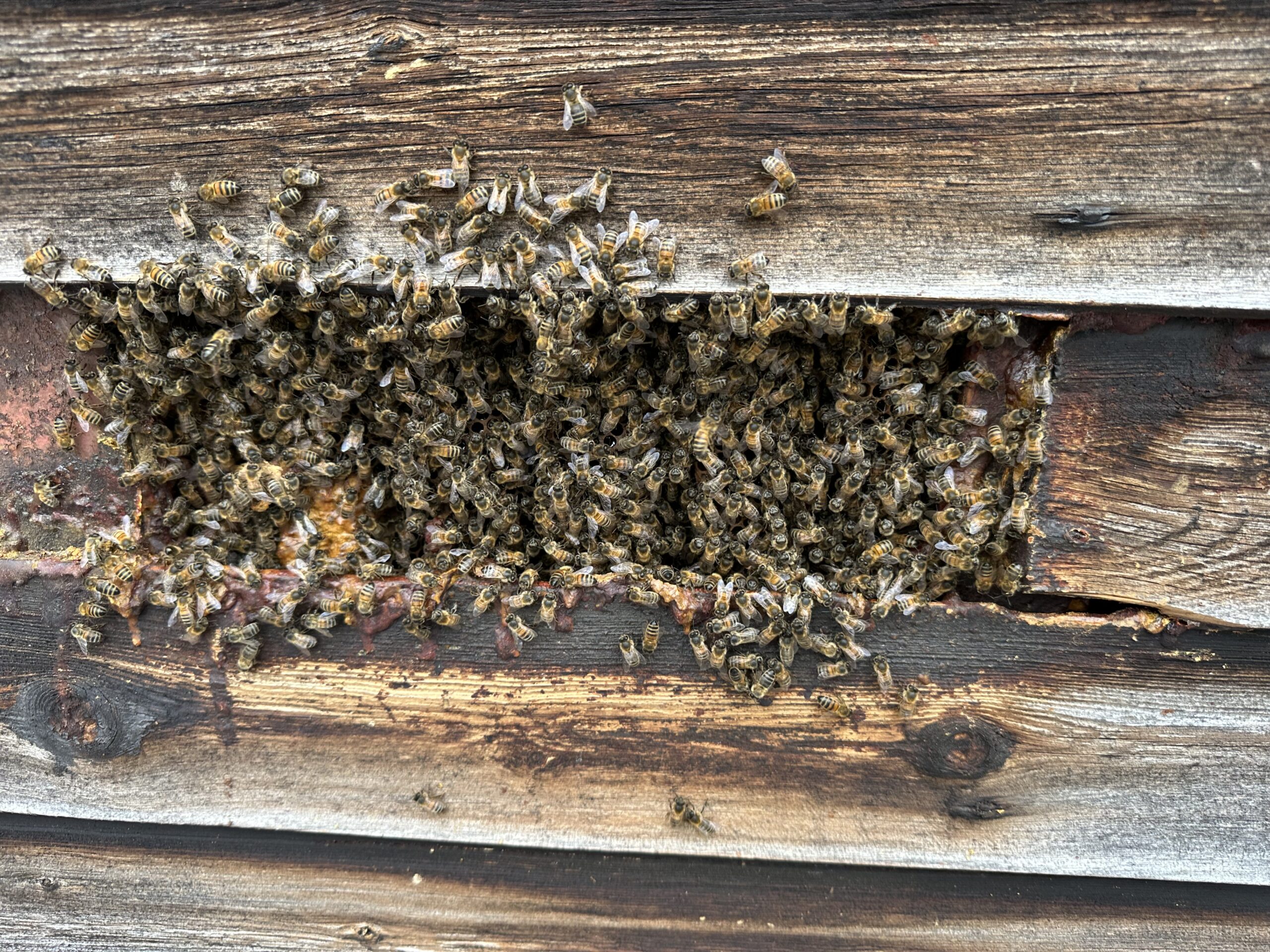
Why Honeybees Choose Roofs, Chimneys and Wall Cavities
If you suddenly notice bees flying in and out of your roofline, chimney or a small gap in your wall, it is rarely random behaviour. Honeybees are highly selective when searching for a new home, and many parts of domestic and commercial buildings unintentionally provide the exact conditions they are looking for.
Honeybees choose roofs, chimneys and wall cavities because these areas provide sheltered, warm and protected nesting environments similar to hollow trees found in nature (which is their natural habitat). Once a colony finds a suitable cavity with stable temperatures and protection from the weather, it may remain there for years if left undisturbed.
At iX5 Pest Control, we regularly deal with honeybee colonies established inside buildings across Northamptonshire, Milton Keynes, Rugby and surrounding areas. Understanding why bees choose these locations helps property owners recognise the signs early, reduce the risk of long-term structural issues, and make informed decisions about live bee removal and proofing solutions.
Why Honeybees Search for Cavities in Buildings
During spring and early summer, honeybee colonies naturally reproduce by swarming. A swarm may contain thousands of bees led by a queen searching for a new nesting site.
Scout bees leave the swarm to inspect potential nesting locations before collectively selecting the most suitable cavity for the colony. In some cases, scout bees may inspect dozens of possible locations before the swarm commits to a permanent home.
Honeybees typically look for locations that offer:
- Shelter from wind and rain
- Stable internal temperatures
- Protection from predators
- Small, defensible entrance points
- Large hidden voids suitable for comb construction
- Minimal disturbance from people or animals
Unfortunately, roofs, chimneys and wall cavities often meet all of these requirements perfectly.
Why Roof Spaces Attract Honeybees
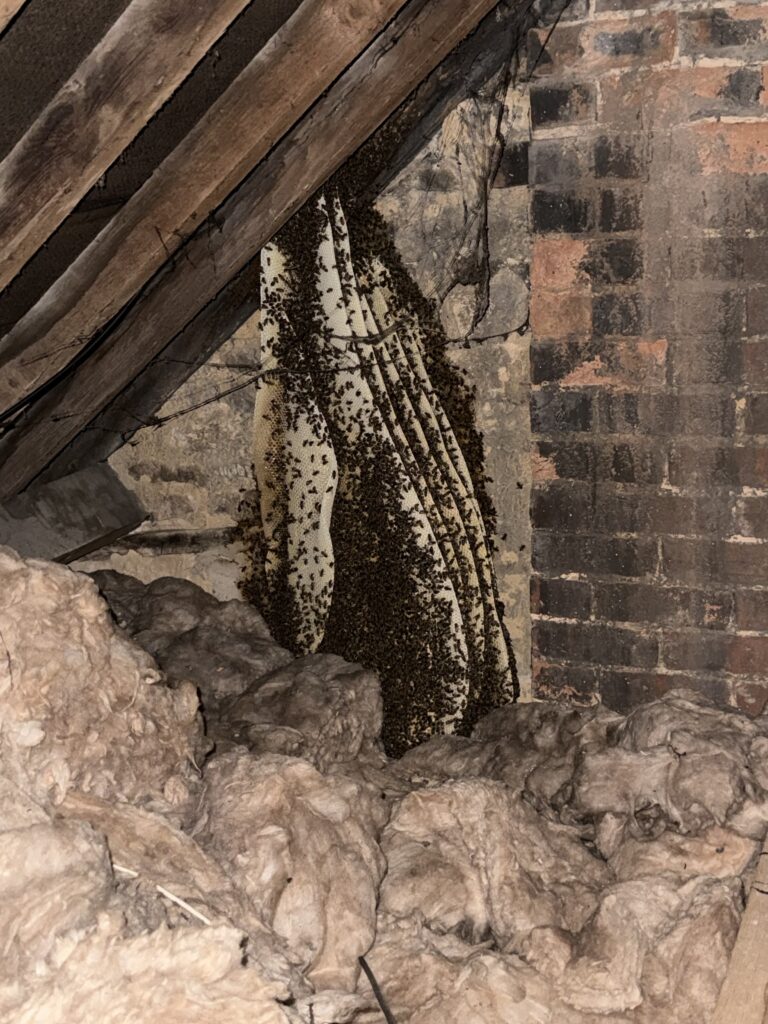
Roof voids are one of the most common places for established honeybee colonies.
From a bee’s perspective, roof spaces provide:
- Warm, insulated conditions
- Dark, enclosed cavities
- Minimal disturbance
- Easy access through damaged soffits, vents or gaps in roofing
Even very small openings can allow access. Once scout bees discover a suitable entrance point, thousands of bees may rapidly move into the cavity and begin building comb.
One reason roof spaces are particularly attractive is temperature stability. Honeybees must carefully regulate the temperature of their colony, especially where brood (developing young bees) is present. Roof cavities often retain warmth far better than exposed outdoor locations.
Many property owners first notice the problem while sitting in the garden and observing repeated bee activity near the roofline, or by hearing an unusual low buzzing / humming sound in loft spaces during warmer weather.
Signs of honeybees in roofs or loft spaces can include:
- Repeated bee traffic to one small access point
- Bees entering beneath roof tiles or fascia boards
- A low humming or buzzing sound in ceilings or lofts
- Increased bee activity during warm weather
- Bees appearing around loft vents or soffits
We regularly encounter situations where property owners initially believe they are seeing “just a few bees,” only to discover that thousands of bees are established deep within a roof cavity.
Why Chimneys Are a Favourite Nesting Location
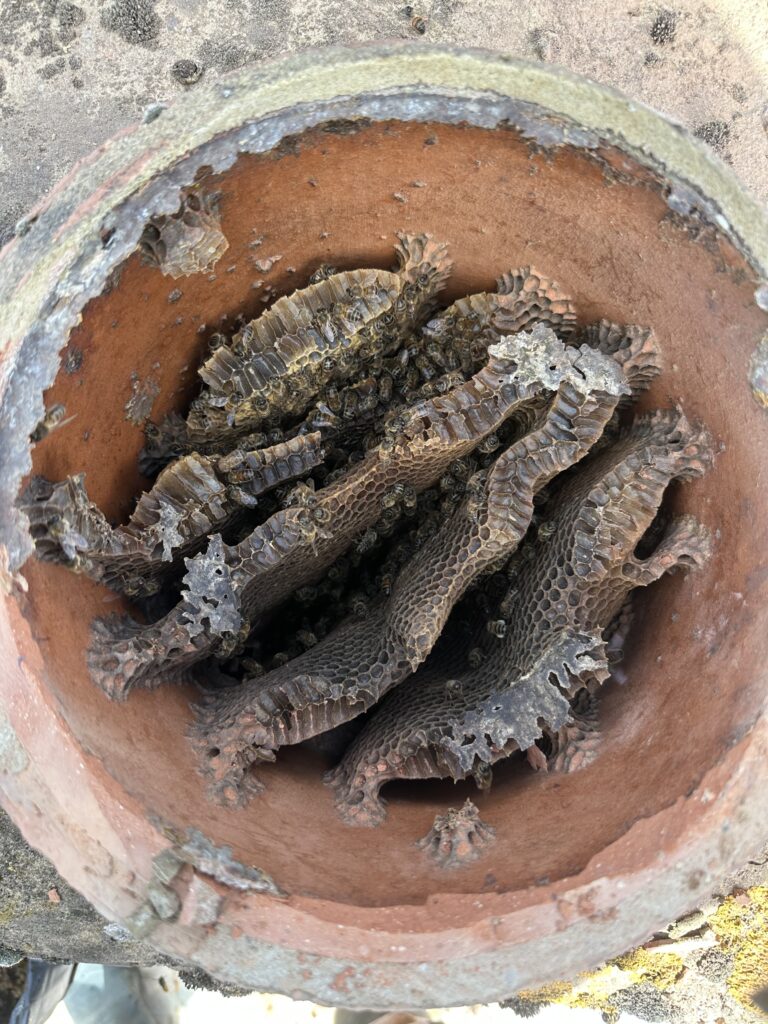
Unused or redundant chimneys are another common location for honeybee colonies.
To bees, a chimney can resemble a large hollow tree cavity. Chimneys offer:
- Vertical protected space
- Good airflow and ventilation
- Warmth retained within brickwork
- Shelter from weather and predators
- Limited human disturbance
Once a colony becomes established in a chimney, the bees can produce significant amounts of wax comb over time – usually around one to one and a half square feet on average for each year they are present. In some cases, colonies remain active for years if left alone.
This can eventually lead to problems such as:
- Collapsed wax comb and honey seepage
- Secondary pest activity
- Bees entering internal rooms
- Difficult and more invasive future removals
Importantly, property owners should never attempt to smoke bees out by lighting fires in the chimney. Established colonies may contain large amounts of wax and honey, creating both potential collapse or fire risks.
Why Bees Enter Wall Cavities
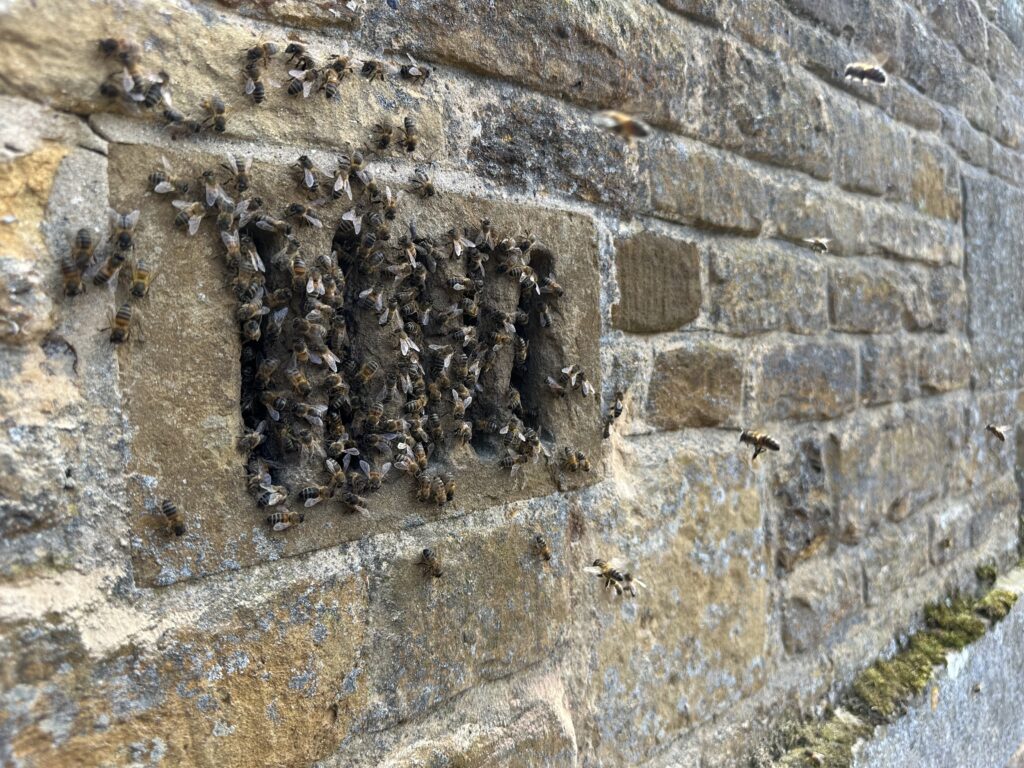
Wall cavities provide an almost perfect protected nesting environment for honeybees.
Bees can gain access through:
- Missing mortar
- Cracks in brickwork
- Gaps around pipework
- Air bricks and vents
- Defects around soffits and roof junctions
- Small gaps around windows or roofing materials
Once inside, the colony remains hidden and protected from weather and predators. In many cases, property owners only become aware of the issue after noticing repeated bee activity around a single entry point on the wall.
Wall cavity colonies can become particularly problematic because access for live honeybee removal is often more complex. In established infestations, sections of plasterboard, brickwork or external materials may need to be carefully opened to safely remove the bees and comb completely.
Why Honey Bees Often Appear to Return to the Same Property
Whilst you won’t see activity, honeybees will remain present over the winter. Activity then becomes noticeable again early in the spring once the weather warms up. Even if a colony dies out naturally, a new swarm is likely to reoccupy the space inhabited by a previous colony.
This happens because:
- Residual wax remains attractive to future swarms
- Colony pheromones can attract scout bees
- Existing entry points remain accessible
- Warm sheltered cavities continue to provide ideal nesting conditions
This is why proofing work following live bee removal is extremely important. Sealing entry points and fitting suitable mesh protection around vents, roof gaps and redundant chimneys can significantly reduce the risk of future occupation.
How to Tell If You Have Honey Bees in Your Property
Many people mistake honeybees for wasps, particularly when large numbers are present around buildings.
Honeybees are usually:
- Smaller and slimmer than bumblebees
- Golden-brown / darker in colour than wasps
- Less aggressive away from the nest
- Seen flying repeatedly to and from the same entry point and sometimes clustering or flying / walking around outside the entrance
- Most active during warmer daytime conditions
Unlike wasps, honeybees generally appear more focused on entering and leaving a single location rather than hovering aggressively around food sources.
If you notice consistent bee activity around rooflines, chimneys, vents or walls, there is a strong possibility a colony may be establishing itself within the structure.
When Are Honeybee Swarms Most Common?
Most honeybee swarming activity occurs between in the Spring / early Summer each year; although activity around an established nest will continue through to about October.
Warm weather encourages colonies to reproduce and search for new nesting sites. This means new bee activity around buildings often increases significantly during:
- April
- May
- June
- July
During this period, scout bees may inspect multiple buildings before selecting a permanent nesting location.
Can Honeybees Damage Your House?
Honeybees themselves are not destructive in the same way as some pests, but long-term colonies inside buildings can still create serious issues over time.
Potential problems include:
- Wax comb collapse causing honey to seep into walls or ceilings
- Damp or Staining from water being evaporated off the nectar to condense it into honey
- Odours can arise from an established colony in confined spaces
- Attraction of secondary pests
- Increased structural access requirements during removal
The longer a colony remains inside a building, the larger and more complex the removal process often becomes.
Is It Safe to Leave Bees in a Wall Cavity or Roof?
Every situation is different.
In some cases, a recently arrived swarm may naturally relocate again within a short period if it has not yet begun establishing comb (usually within 36-48 hours of arrival, maximum). However, once comb construction starts, colonies usually become permanent unless professionally removed.
Early assessment is always recommended.
What Should You Do If Bees Move Into Your Property?
If you notice bees actively entering a building cavity, early action is important.
Property owners should avoid:
- Blocking entrances – they will find another route out and that could mean you now have a considerable number of bees inside the building itself.
- Spraying chemicals
- Attempting DIY removals
- Disturbing the colony
- Lighting fires beneath chimney colonies
Honeybees are important pollinators and should be handled responsibly wherever possible. At iX5 Pest Control, we always consider ethical live removal and relocation options.
Professional assessment can help determine:
- Whether they are honeybees
- Whether a swarm is temporary or established
- The safest and most cost-effective removal approach
- Whether proofing work is required afterwards
Why Honeybees Choose Buildings So Frequently
Over hundreds of years we have removed a large number of trees and natural habitat, and put up buildings instead. Modern buildings unintentionally provide many of the same environmental conditions honeybees seek in natural nesting sites.
In summary, honeybees are attracted to buildings because they provide:
- Warmth
- Shelter
- Stable temperatures
- Protection from predators
- Hidden nesting cavities
- Small defensible entrances
- Long-term colony stability
Unfortunately, roofs, chimneys and wall cavities often provide ideal conditions for colonies to become firmly established.
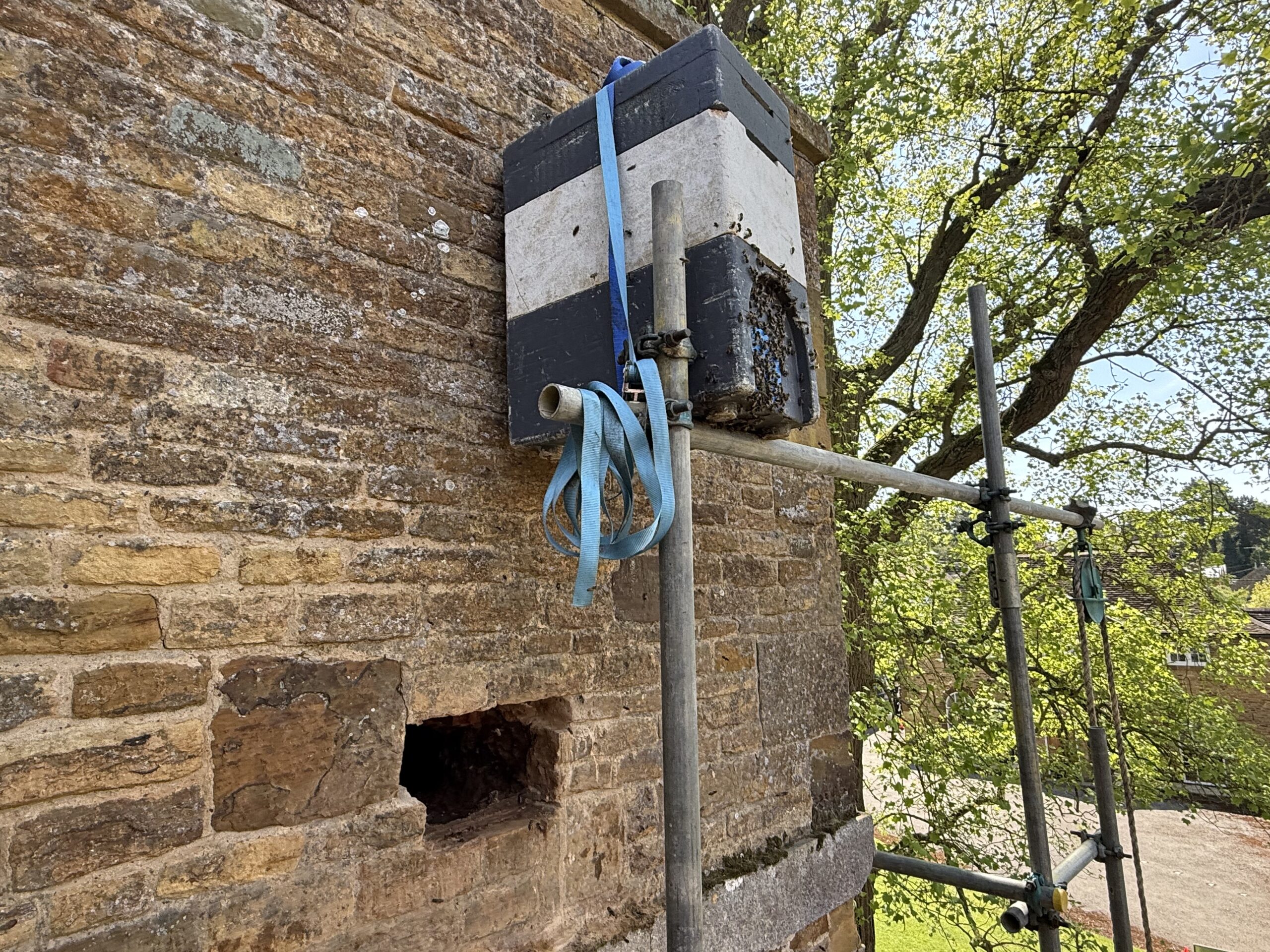
Professional Honey Bee Advice and Live Removal
Every bee situation is different. Some colonies can safely remain in place temporarily, while others require urgent intervention due to safety risks, structural concerns or the location of the nest.
At iX5 Pest Control, we provide:
- Honeybee identification and surveys
- Honest professional advice
- Ethical live honeybee removals
- Access planning for difficult colonies
- Preventative proofing recommendations
- Support for domestic and commercial properties
If you suspect honeybees have moved into your roof, chimney or wall cavity, early assessment can help prevent a far more complex and costly problem later.
You can also read our related pages on:
Frequently Asked Questions About Honeybees in Buildings
Most frequent questions and answers
Why are honeybees entering my roof?
Honeybees are usually attracted to roofs because they provide warm, sheltered and protected cavities that closely resemble natural nesting sites such as hollow trees.
Will honeybees return to the same location?
They can. Residual wax, pheromones and unsealed entry points may attract future swarms to the same property.
How much does live honeybee removal cost?
The cost depends on factors such as accessibility, colony size, height, and whether building materials need to be opened to safely remove the bees and comb.
Can honeybees live in chimneys?
Yes. Unused chimneys often provide ideal conditions for honeybee colonies due to their protected internal space and stable temperatures.
Should I block the hole where bees are entering?
No. Blocking entrances can trap bees inside walls or roofs, potentially increasing structural issues and forcing bees into other parts of the property. Seek advice first.
Are honeybees dangerous?
Honeybees are generally defensive rather than aggressive, but established colonies inside buildings can still present risks, particularly near entrances, walkways or occupied areas.