


What To Do If Bees Nest In Your Property
(And Why You Should Never Kill Them)
Finding bees in or around your property can be a bit of a shock, especially if you’re not sure what you’re dealing with.
You might notice:
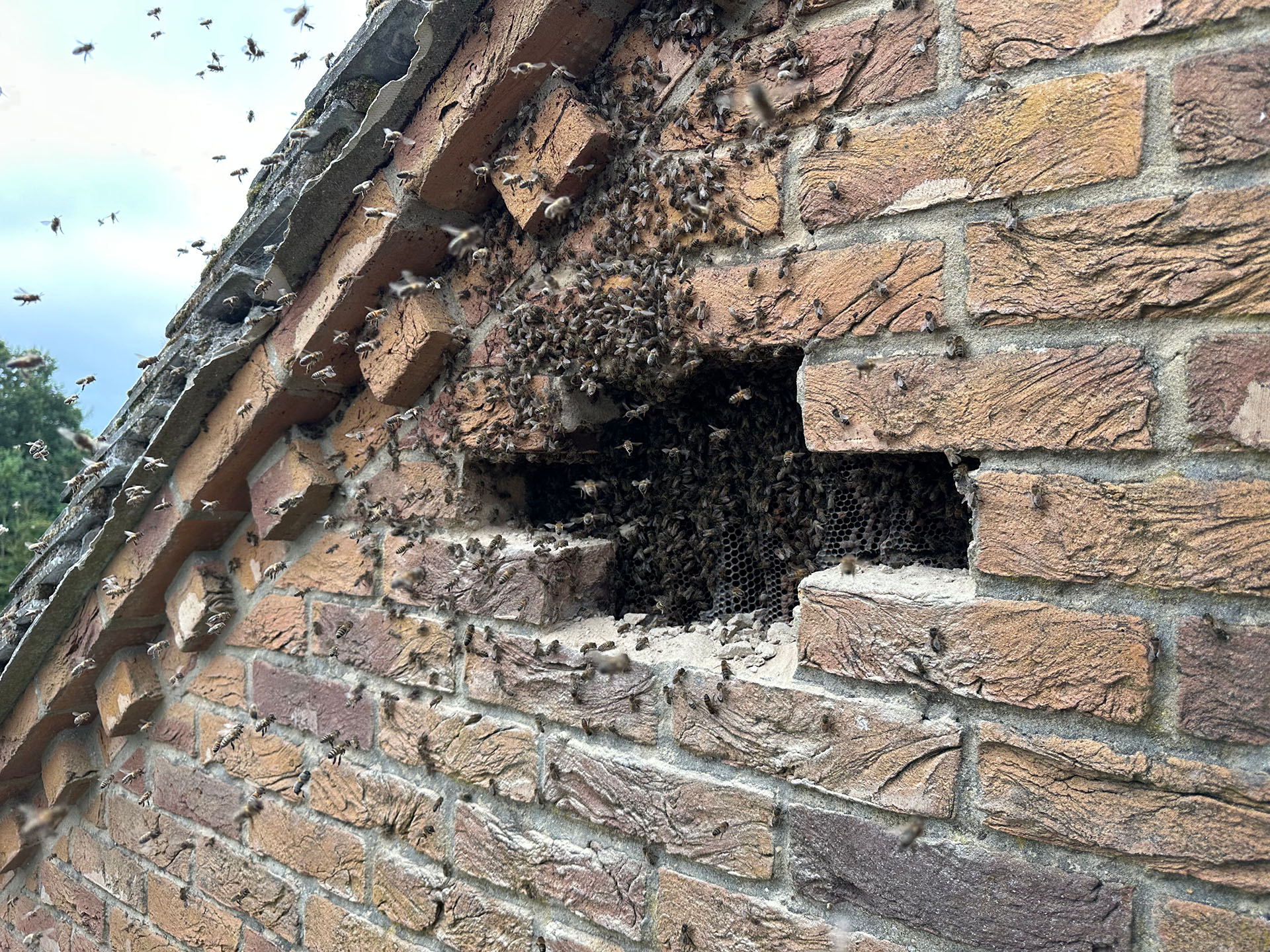
- Bees flying in and out of a wall, roofline or chimney
- A cluster hanging from a tree or fence
- Increased activity around your garden
If you’re dealing with bees in your house, roof, or walls, your first instinct might be to get rid of them quickly.
But here’s the reality:
Bees are not pests in the traditional sense and killing them should never be necessary.
The good news?
In most situations, bees are not aggressive, you are not in immediate danger and the issue can be handled safely and calmly.
At iX5 Pest Control, this is something we deal with every week during Spring to Autumn and more often than not, the situation is far less serious than it first appears.
What Should You Do If Bees Nest In Your Property?
- Keep your distance and avoid disturbing them
- Do not block entry points or use sprays
- Try to identify the type of bee if possible
- Get professional advice early
- Arrange safe relocation where appropriate
What To Do If You Find Bees (Quick Guide)
If you’ve just discovered a bee nest in your wall, roof, or garden, here’s exactly what to do:
- Keep your distance
Avoid disturbing the bees, they’re usually calm unless provoked. - Do not block entry points
Blocking holes in walls, soffits or vents can trap bees inside and make the situation worse. - Do not spray or use DIY treatments
These rarely solve the problem and can lead to more complex issues later. - Try to identify what you’re dealing with
Bumble bee, honeybee, or something else. The correct approach depends on the species. - Get professional advice early
A quick assessment can prevent a much bigger (and more expensive) problem later.
Not sure what you’re looking at?
You can send a photo to iX5 Pest Control via WhatsApp and the team will help identify the species and advise on the next step.
First Things First: Don’t Panic
It’s completely normal to feel concerned, especially if the bees are close to your home or business.
But in reality:
- Bees are focused on foraging, not attacking
- Many situations are temporary or low risk
- The right approach is calm and controlled, not reactive
We regularly attend situations where customers expect the worst and it turns out to be something straightforward and very manageable.
Why You Should Never Kill Bees
There are over 200 species of bee in the UK, and many are under threat.
They play a critical role in:
- Pollinating crops
- Supporting plant life
- Maintaining ecosystems we rely on every day
Without bees, food production and biodiversity are directly affected.
That’s why iX5 Pest Control always takes a responsible approach:
Relocation is prioritised wherever possible, and eradication is not something we would advocate.
Know What You’re Dealing With: Bumble Bees vs Honeybees
Not all bees behave the same and understanding the difference is key to choosing the right approach.
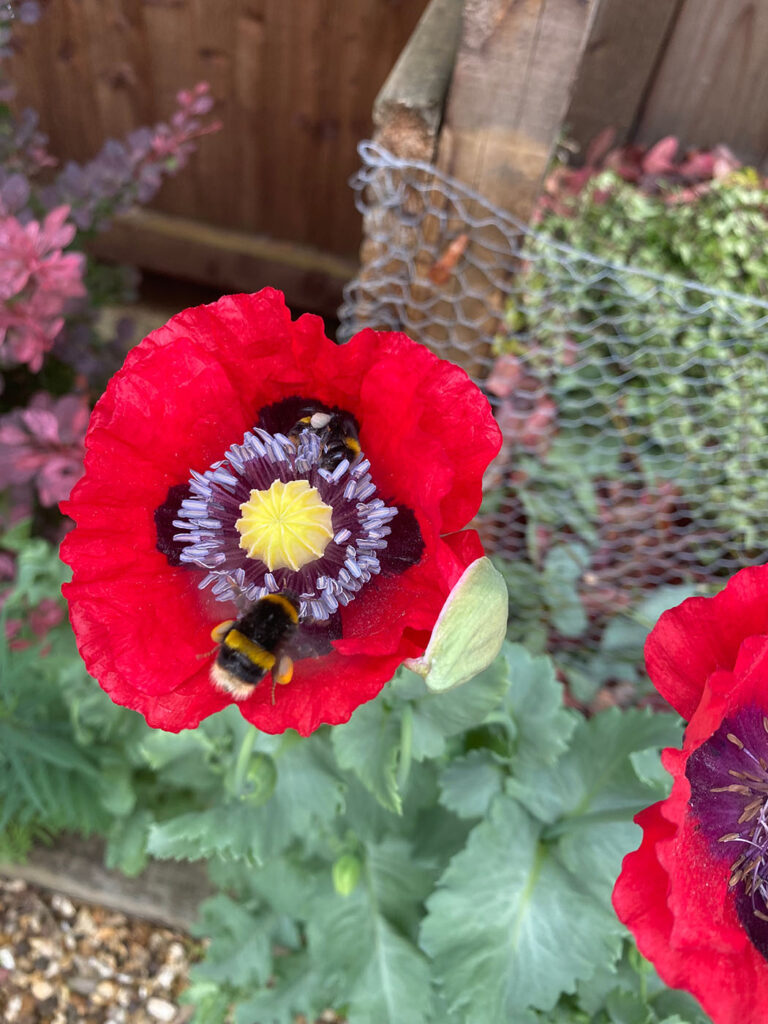
Bumble Bees: Often Best Left Alone
Bumble bees are:
- Round, fluffy, and generally gentle
- Rarely aggressive unless disturbed
- Short-term nesters
In many cases, they are not a problem and do not require removal.
Their lifecycle:
- Spring → queen starts the nest
- Summer → colony grows
- Midsummer → colony declines and
- Mid to Late Summer → nest naturally dies off
In many cases:
The best solution is to leave them alone and let nature take its course.
When might action be needed?
- The nest is near a doorway, path, or high-traffic area
- There’s concern for children, pets, or vulnerable individuals
- The nest is inside a structure and causing concern
In these cases, iX5 Pest Control will:
- Assess the risk
- Provide clear advice
- Only carry out relocation where it is safe, practical, and appropriate
If you’re unsure, you can send a photo to our team at iX5 Pest Control via WhatsApp for guidance before taking action.
Honeybees: Relocate Wherever Possible
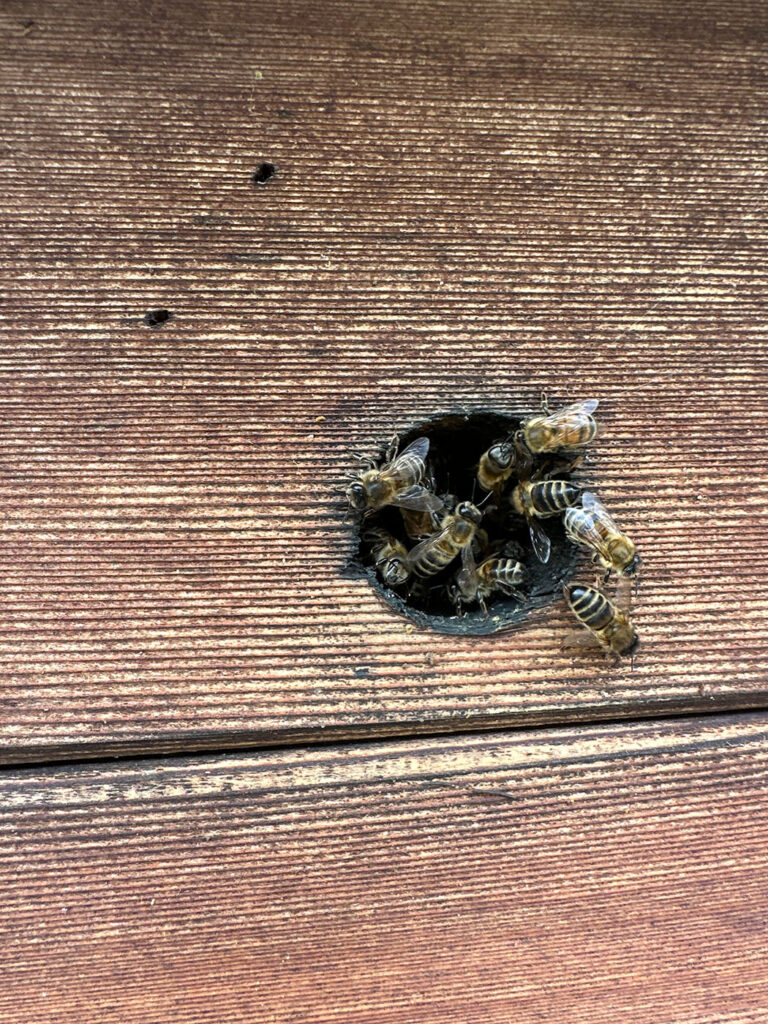
Honeybees behave differently and require a specialist approach.
If you see a swarm:
- It may look alarming
- But it’s usually calm and temporary
- Bees are simply resting while searching for a new home
However, it’s important not to ignore a swarm.
If left, bees may move into:
- Walls
- Chimneys
- Roof spaces
If honeybees establish a nest in your property:
Over time, they can:
- Build honeycomb inside walls or other voids
- Cause staining or honey seepage
- Attract other pests
- Become more complex (and costly) to remove
The iX5 Pest Control approach:
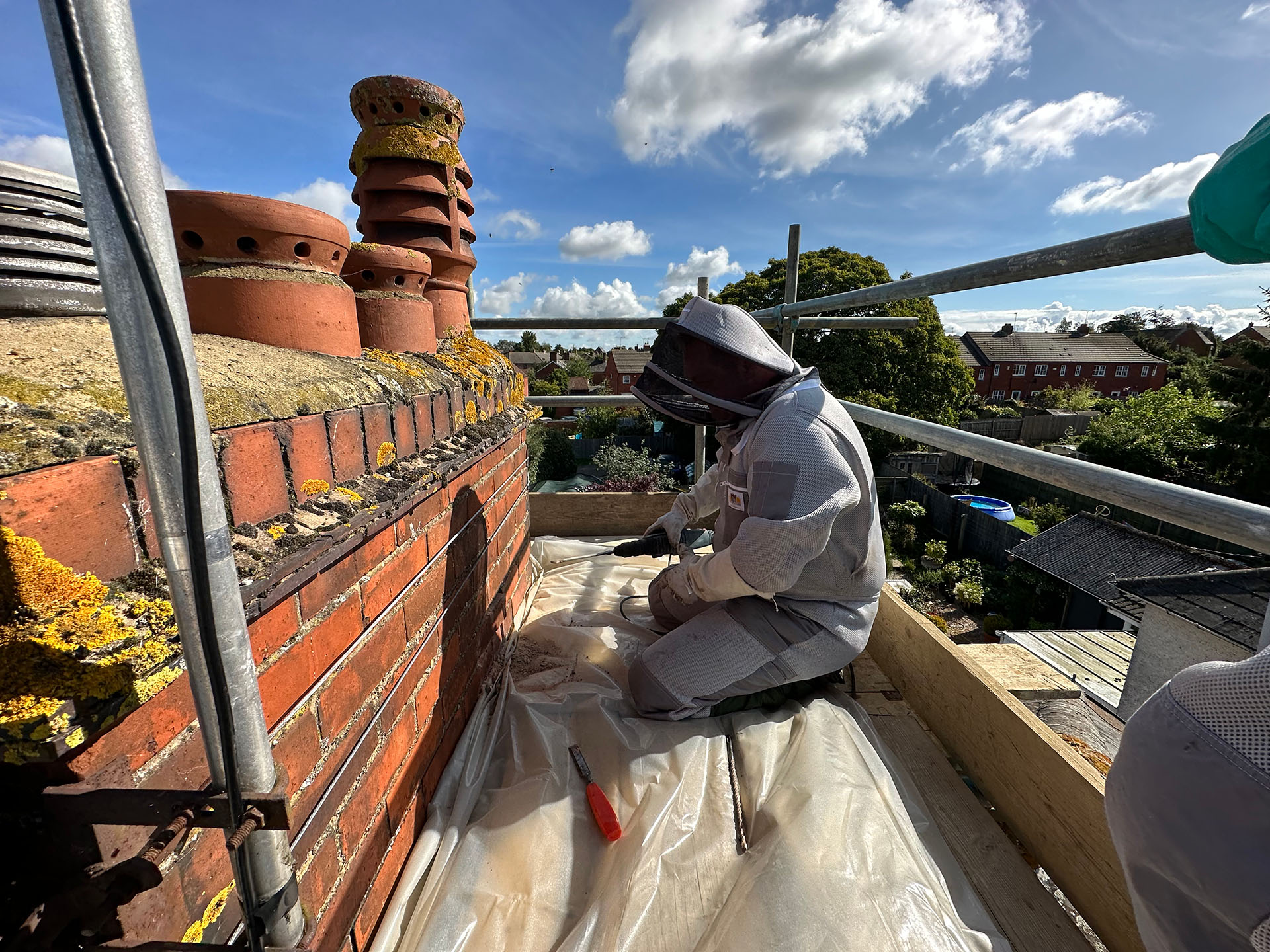
- Live collection and removal
- Collaboration with local beekeepers and apiaries
- Safe rehoming of bees
In many cases, bees are relocated into our apiaries or with trusted local beekeepers.
Understanding the Risk to People
In most situations, bees pose very little risk.
However, extra care is needed if:
- Someone has a known allergy to bee stings
- Bees are in a high-traffic or confined area
- The nest is being disturbed regularly
While bees are not aggressive by nature, they may defend themselves if they feel threatened.
If there is a known allergy risk:
Do not take chances, seek professional advice immediately.
If someone with an allergy is stung, seek medical attention straight away.
When You Should Act Quickly
You should contact iX5 Pest Control sooner rather than later if:
- Bees are entering your home through walls, vents, chimneys or rooflines
- You can hear buzzing inside walls, ceilings or other voids
- The colony appears to be growing or well established
- The location presents a risk to people or the public
Early advice can mean:
A simple swarm collection or relocation
Instead of a more complex and disruptive removal later
How iX5 Pest Control Can Help
iX5 Pest Control provides:
- Accurate identification (including from photos)
- Honest, practical advice
- Humane relocation wherever possible
- Safe removal where necessary
- Prevention and proofing guidance
iX5 Pest Control is:
- A BPCA member
- Experienced in both pest control and beekeeping
- Insured for all bee removal work
- Equipped to handle domestic and commercial situations
So you’re not just getting pest control, you’re getting specialist bee expertise.
The Bottom Line
If you have a bee nest in your house, wall, or garden:
- Don’t panic
- Don’t spray
- Don’t block entry points
- Don’t attempt to remove them yourself
Instead:
Pause, assess, and get the right advice
If you’re reading this, you’re already doing the right thing by checking before taking action.
In most cases, there is a solution that:
- Keeps you safe
- Protects your property
- And preserves an important part of the environment
Need Help or Not Sure What You’re Dealing With?
If you’ve spotted bees and aren’t sure what to do:
Call: 01604 328545
Email: [email protected]
Or send a photo to iX5 Pest Control via WhatsApp, the team will help identify what you’re dealing with and guide you on the best next step.
FAQs About Bees in Your Property
Most frequent questions and answers
Are bees dangerous in the home?
In most cases, no. Bees are not aggressive unless provoked, but caution is needed in enclosed or high-traffic areas.
Can I remove bees myself?
DIY removal is not recommended and can make the situation worse. Professional advice is the safest approach.
Will bees go away on their own?
Bumble bee nests usually die off naturally by late summer. Honeybees will not leave once established and may require professional removal.
Do iX5 Pest Control kill bees?
No. iX5 Pest Control prioritises relocation and humane solutions.